
types of thread to use in your embroidery
When you started embroidery, I’m sure you thought the materials would be very straightforward, right? Fabric, needles, thread. How complicated could it be? It turns out, there’s a lot more to it! Here’s a little introduction to the types of thread you might come across on your embroidery journey. I’ve also explained a bit about needles in this post, and an article of fabrics is coming soon!
Below, I have recommended some brands to buy your thread from. I’m sure there are plenty more great companies to choose from too! However, do be careful about buying very cheap threads. You will notice a difference in quality between branded and off-brand threads. But the really cheap bundles you get online (think shein, temu, etc.) can often include threads that are not colourfast. This means that the dye may run if they get wet - obviously not ideal after hours of stitching! These threads should only be used for practice, rather than stitching something meaningful just in case!
Stranded Cotton
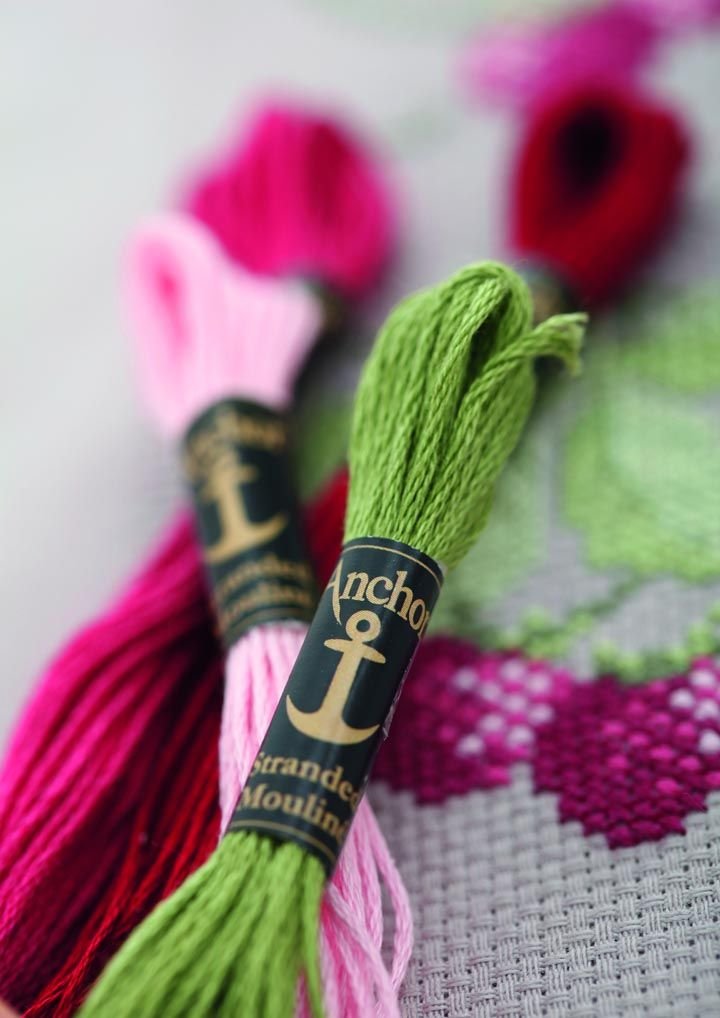
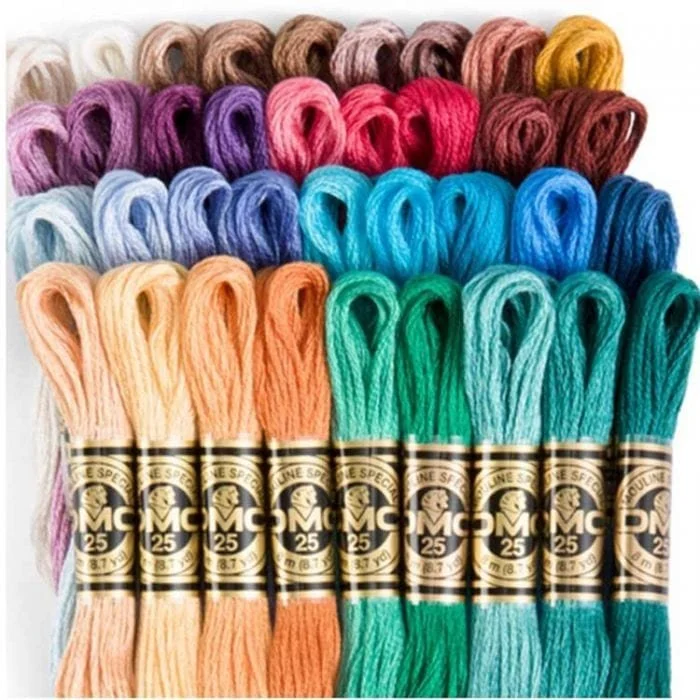
This is the standard thread used for embroidery, sometimes called embroidery floss, and is usually sold in 8metre skeins. It's made up of 6 strands of cotton and designed to be separated before stitching. So you can use any amount between 1 and 6 strands - or even more! I always separate out all the strands I'm working with so that they look neater and become easier to work with. 6 stranded floss can also come in variegated colours, metallic and silk. The two brands I recommend are DMC and Anchor. They are good quality threads and have a wide range of colours to choose from. Stranded Cotton is what I use for the majority of my kits and designs.
Perlé
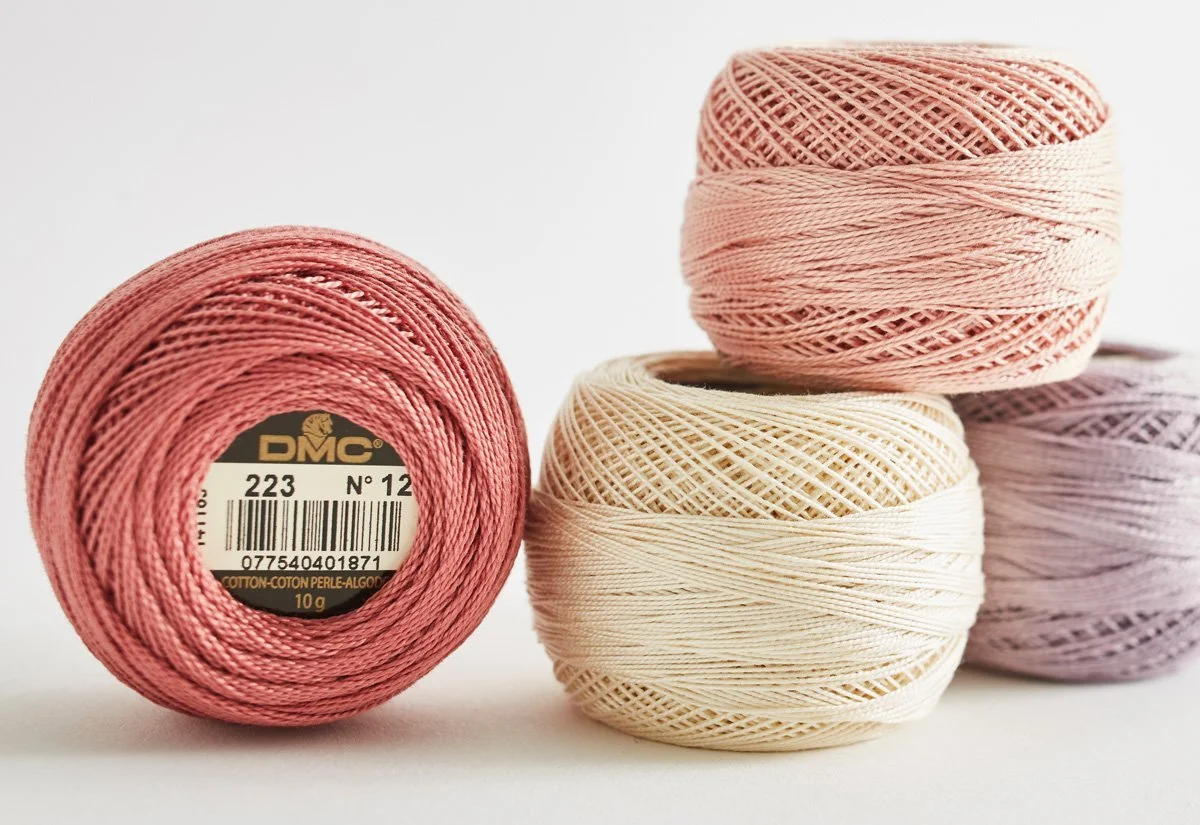
Perlé, or pearl cotton, is another type of cotton thread. It's made of two strands twisted around each other and has a slight sheen to it. Unlike stranded cotton, you do not split the threads of perlé. It comes in a range of different sizes - 3, 5, 8, 12 with 3 being the thickest and 12 the thinnest. It is sold in either skeins or balls. Also made by DMC and Anchor. You can see Perlé used in my Mountmellick Shamrocks and Irish Harp kits.
Coton à Broder
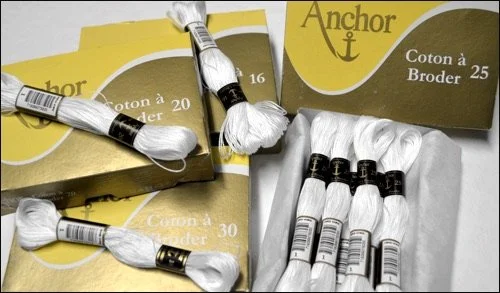
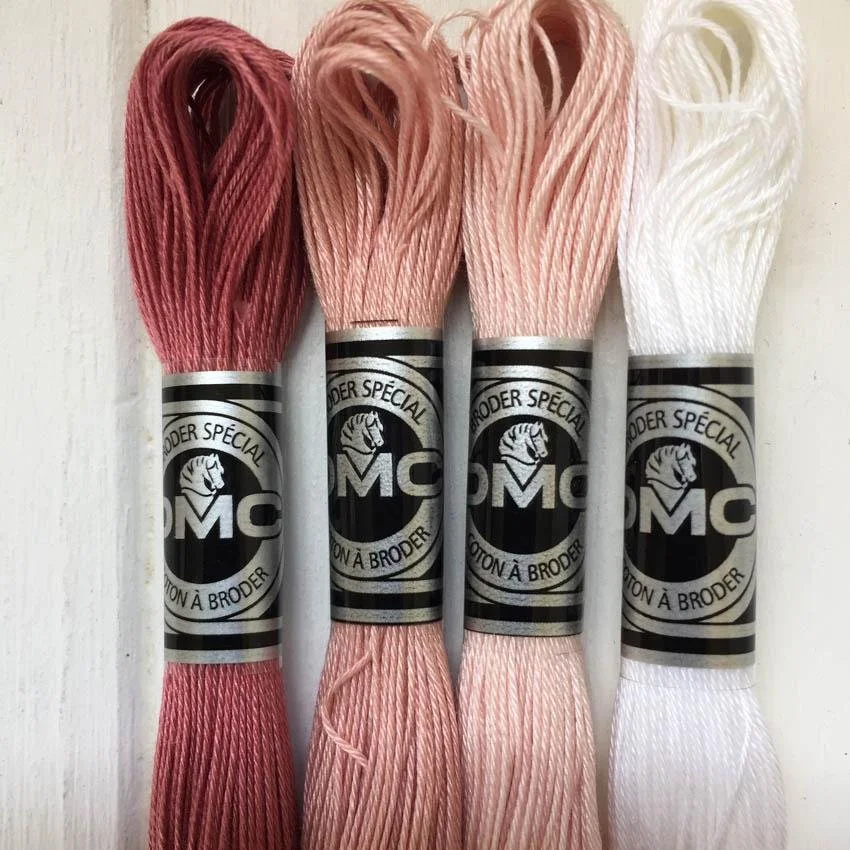
Coton à broder is similar to perlé thread, but is 4 ply rather than 2 ply. You do not split the strands and it comes in a variety of sizes - 16 being the thickest and 30 being the thinnest. Unlike perle, it has a matte finish. It is mostly used in blackwork and whitework techniques. Again, DMC and Anchor are the brands used most often.
Sewing Thread
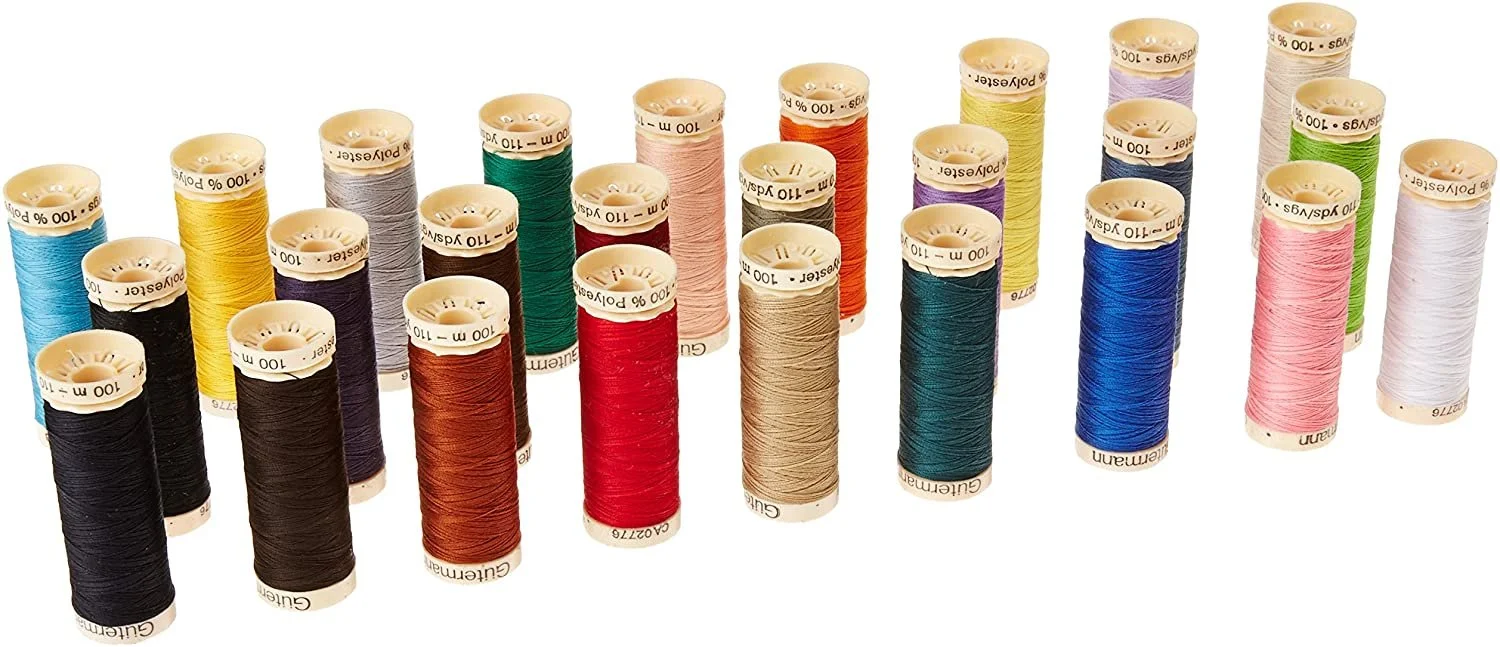
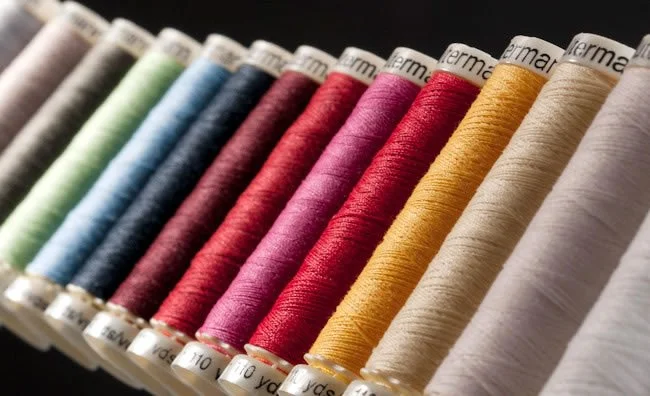
Regular sewing thread comes in both polyester and cotton, but is still perfect to stitch with. It's a very thin thread so can be great for small details and shading. Gutermann is probably the most common brand. Again, this thread does not divide into strands.
Wool
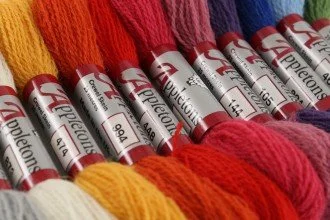
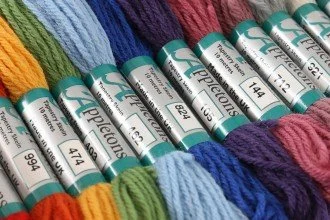
There are a couple of types of wool specifically for embroidery, such as crewel wool (2 ply) and tapestry (4 ply). But of course you can also stitch with knitting and crochet yarns. Appletons is the most popular brand for embroidery wools with the widest range of colours. DMC also do a naturally dyed range called Eco Vita. Wools are also non-divisible, so if you want a finer look then choose a thinner wool. You can see how crewel wools are used in my Sheela na Gig kit.
Ribbon
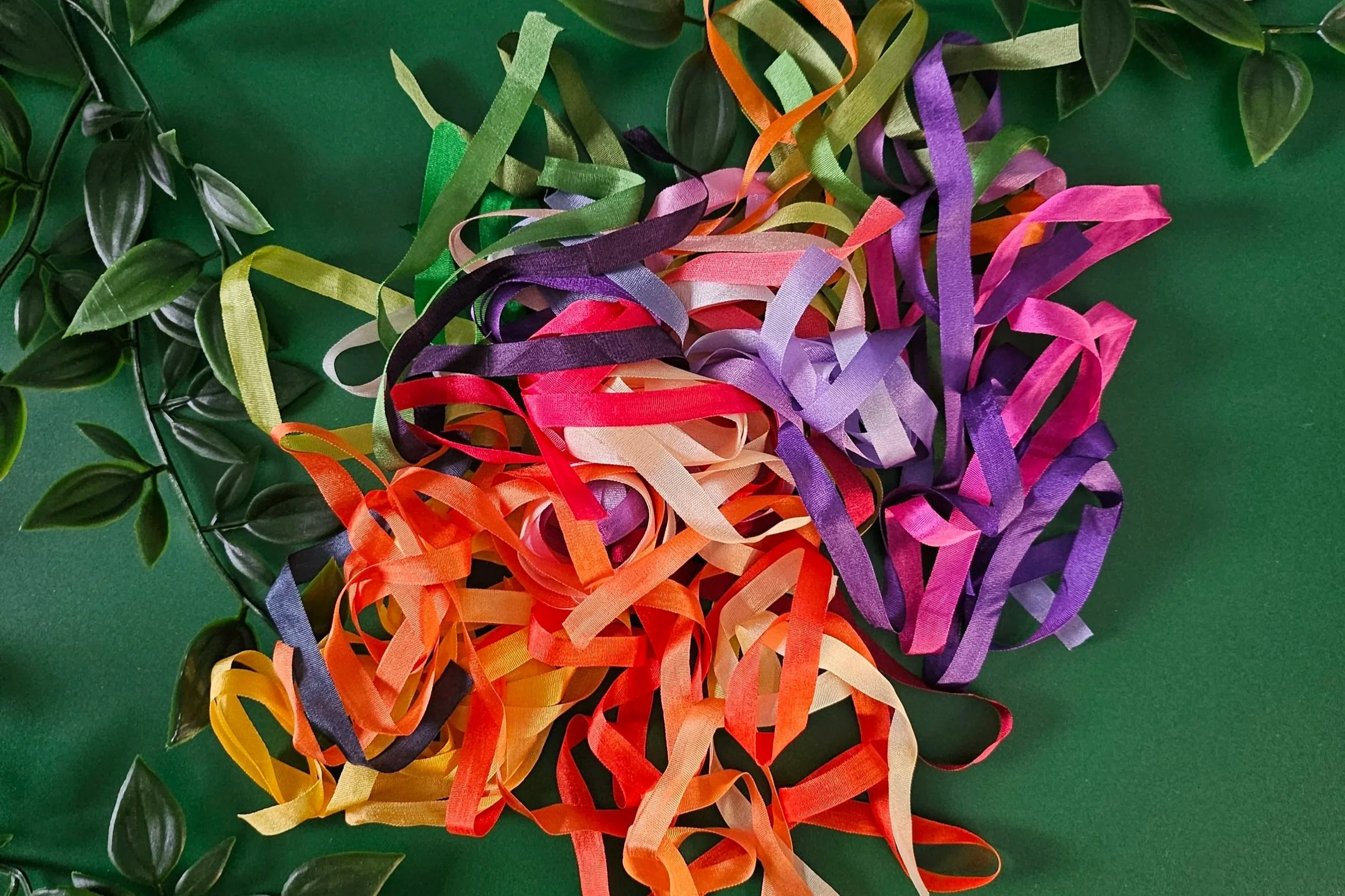
Ok, ribbon isn’t technically thread but you can still stitch with it! Ribbon embroidery is generally done using 100% silk ribbons. These ribbons are quite delicate, so only used for quite decorative work. They come in a variety of widths - 2, 4, 7, and 13 mm - 4mm and 7mm being the most popular. I stock a small amount of silk ribbons in the be alice shop, but for a wider range you can go to Crafty Ribbons. You can see examples of ribbon embroidery in my Ribbon Heart and Ribbon Vase kits.
So now you know! I hope you feel a little more confident now in trying out some new threads and techniques. Stay tuned for the next post on the types of fabric you can stitch!
